

MAJOR INFRASTRUCTURE IS COMING TO THE LEKKI- EPE CORRIDOR: HERE ARE WHAT PROPERTY OWNERS SHOULD KNOW
The Lekki-Epe corridor is about to experience a major transformation. The Lagos State Government, through the Ministry of Energy and Mineral Resources and in collaboration with the Ministry of Physical Planning and Urban Development, recently organized a comprehensive stakeholders’ engagement to discuss the development of a critical energy infrastructure project.
This initiative includes:

 2. Verify Survey Alignment: Ensure your property boundaries match official surveys.
 3. Confirm Planning Approvals: Make sure any developments comply with government planning regulations.
4. Conduct Land Registry Searches: Verify ownership and any existing government encumbrances.
Skipping these steps can result in losing your property or facing demolition notices—far more costly than taking a few hours to verify your documentation.
3. Confirm Planning Approvals: Make sure any developments comply with government planning regulations.
4. Conduct Land Registry Searches: Verify ownership and any existing government encumbrances.
Skipping these steps can result in losing your property or facing demolition notices—far more costly than taking a few hours to verify your documentation.
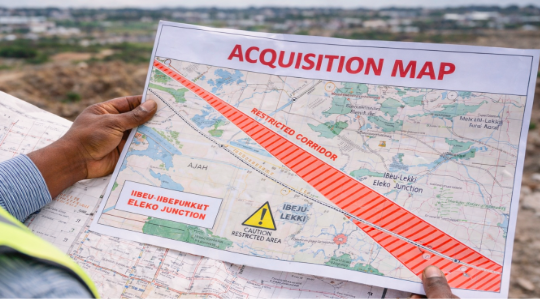
- A 132KV Power Transmission Line extending from Ajah to the Ibeju-Lekki (Eleko) Junction, designed to improve electricity distribution across key areas and support rapid industrial and residential growth.
- A Strategic Gas Pipeline Corridor running from Bonny Camp to Alaro City in Epe, aimed at ensuring a reliable gas supply for industrial and commercial use.
What This Means for Property Owners
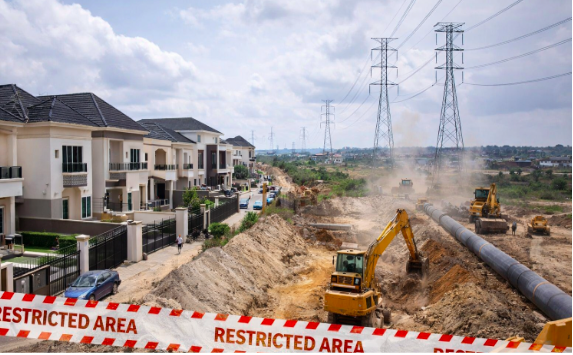
Infrastructure development can significantly increase property values—but only for compliant properties. Unfortunately, government projects like transmission lines and pipeline corridors often come with:- Corridor Restrictions: Certain zones may become off-limits for construction or modification.
- Demolition of Encroachments: Structures that fall within planned alignments could be removed.
- Compulsory Acquisition: Properties might be acquired by the government if they obstruct infrastructure plan
- Alignment Enforcement: Even minor boundary issues could create conflicts with the project.
- Check Acquisition Maps: Confirm your land is not within restricted corridors.
2. Verify Survey Alignment: Ensure your property boundaries match official surveys.
3. Confirm Planning Approvals: Make sure any developments comply with government planning regulations.
4. Conduct Land Registry Searches: Verify ownership and any existing government encumbrances.
Skipping these steps can result in losing your property or facing demolition notices—far more costly than taking a few hours to verify your documentation.


Comments