
Unlocking Diaspora Capital for Housing: How FMBN’s Mortgage Scheme Could Transform Nigeria’s Real Estate Sector
The Nigeria government, in collaboration with the Nigerian diaspora community and the Federal Mortgage Bank of Nigeria (FMBN), has designed a Diaspora Mortgage Loan initiative to unlock the housing gap in the country. This initiative represents more than just housing products; it presents a strategic financial instrument that can transform diaspora remittance into structured capital, unlock foreign inflow, and accelerate large-scale housing delivery.
Overview of the Scheme
The NHF Diaspora Mortgage Loan is designed to provide Nigerians abroad with a structured and secured pathway to homeownership without the need for physical presence. According to Shehu Osidi, the Managing Director and Chief Executive, this scheme presents a golden opportunity for Nigeria to tap the diaspora economy and convert remittances into homes that Nigerians (home and abroad) truly need.
 This scheme is open to all Nigerians in the diaspora aged 18 and above. Interested participants must first register with the National Housing Fund (NHF) through a dedicated digital platform created by FMBN.
Through this platform, subscribers can conveniently:
This scheme is open to all Nigerians in the diaspora aged 18 and above. Interested participants must first register with the National Housing Fund (NHF) through a dedicated digital platform created by FMBN.
Through this platform, subscribers can conveniently:
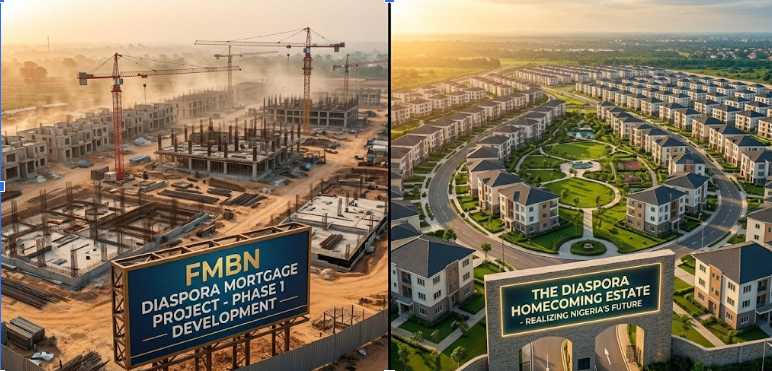 If effectively implemented, this initiative could become one of the country’s most reliable sources of foreign exchange (a catalyst for mass housing development and a lasting bridge between Nigeria and its global citizens).
Eligibility and Registration
This scheme is open to all Nigerians in the diaspora aged 18 and above. Interested participants must first register with the National Housing Fund (NHF) through a dedicated digital platform created by FMBN.
Through this platform, subscribers can conveniently:
- Register
- Make contributions
- Upload required documents
- Track their accounts
- Apply for mortgage loans from anywhere in the world
Contribution Requirement and Loan Qualification
Interested participants are required to make a monthly contribution in foreign currency (typically in dollars), based on their income levels, ranging from $100 to $200. These contributions will help establish eligibility and demonstrate repayment capacity. To be qualified for the loan, a monthly contribution must be made for at least 12 months. Once qualified, applicants can access mortgage loans up to N100 million through Primary Mortgage Banks, which serves as intermediaries for loan processing, credit checks, and documentation.Loan Features and Structure
The loans are offered at a competitive single- digit interest rate of 9% of the property value. A key feature of the scheme is that loan disbursements are made directly to verified developers or owners of approved housing units rather than to individuals. The financed property serves as a collateral, and comprehensive insurance coverage is provided to protect against risks such as fire, burglary, and unforeseen events. Repayments are made in Naira with flexible options allowing monthly, quarterly, or annual payments.Digital Access and Convenience
One of the strengths of the scheme is its fully digital structure which allows contributors to complete the entire process from registration to loan application, and repayment online. This makes the scheme accessible to Nigerians regardless of their location across the globe.Addressing Trust and Investment Risks
This initiative will help solve a major barrier to diaspora real estate investment issues such as fraudulent land deals, abandoned projects and unverified developers, which have discouraged many Nigerians abroad from investing into housing. from committing their hard earned money into housing investments. The Diaspora Mortgage Scheme addresses these concerns by:- Verifying applicants through NiDCOM
- Engaging accredited Primary Mortgage Banks for due diligence and credit checks
- Using the financed property as collateral
Economic and Strategic Impact
The FMBN Diaspora Mortgage Loan is a strategic lever for financial transformation. It has the potential to convert diaspora remittance into structured capital, increase foreign exchange inflows, and support large-scale housing development in Nigeria.Conclusion
If effectively implemented, this initiative could become one of the country’s most reliable sources of foreign exchange (a catalyst for mass housing development and a lasting bridge between Nigeria and its global citizens).


Comments